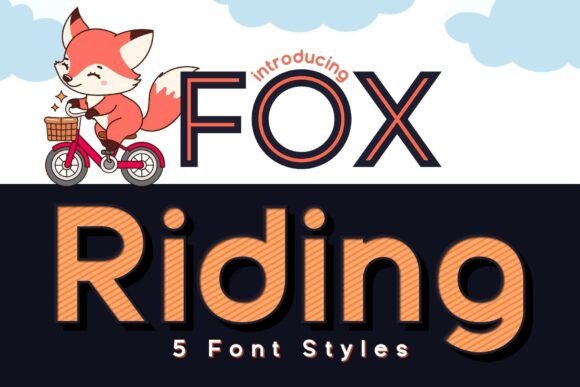
Fox Riding Font Review
It was a quiet afternoon in the studio, and I found myself staring at a blank brand board, trying to figure out how to give this new café identity a personality. The client wanted something warm, approachable, and a little bit quirky. I reached for Fox Riding, a font that had been sitting on my desktop for a while, waiting for the right project. As soon as I typed out the café’s name, it felt like the design had finally come alive.
Fox Riding for Logo Design and Brand Identity
As a display font, Fox Riding brings a unique charm that stands out without being overwhelming. Its 5 styles—ranging from bold to light—offer flexibility for different branding needs. When I tested it on a logo concept, the soft curves and slightly irregular strokes gave the brand a handcrafted feel that resonated with the café’s aesthetic. It wasn’t too rigid or too casual, which made it perfect for a business that wants to feel both professional and welcoming.
The font’s personality is inviting but not overly playful. It works well for brands that want to convey warmth and creativity without leaning into whimsy. In a logo, Fox Riding adds a sense of authenticity, making it ideal for boutique shops, creative studios, or local businesses looking to stand out.
Fox Riding for Packaging Design and Product Labels
I later used Fox Riding on a packaging mockup for a line of handmade soaps. The font’s organic shape and subtle variations made it feel like it had been hand-lettered, which aligned perfectly with the product’s artisanal vibe. On a label, it added visual interest without competing with the imagery or product details.
One thing I noticed was that Fox Riding holds up well in larger sizes, especially when used as a headline or title. However, it’s best avoided for small text or long paragraphs. In a product label, it worked beautifully as a header, but I wouldn’t recommend using it for ingredient lists or detailed descriptions where clarity is key.
Fox Riding for Web Design and Social Media Graphics
When I applied Fox Riding to a website header, it brought a fresh, modern edge to the design. The font’s clean lines and balanced proportions made it readable even at smaller sizes, which is a big plus for web use. On social media posts, it added a personal touch, making the content feel more engaging and visually dynamic.
For digital projects, Fox Riding pairs well with simpler sans serif fonts for body text. I experimented with pairing it with a clean, neutral typeface, and the contrast helped guide the viewer’s eye through the design. It also worked well as an accent font for call-to-action buttons or featured sections, adding a layer of personality without overwhelming the layout.
Fox Riding for Business Cards and Printed Materials
Testing Fox Riding on a business card was a revelation. The font’s texture and character made the card feel more memorable, which is exactly what you want for a first impression. Whether it was used as the main text or as a tagline, it added a level of sophistication that elevated the overall design.
On printed materials like flyers or posters, Fox Riding can be a strong focal point. Its distinct style makes it easy to spot, which is great for marketing pieces that need to grab attention. However, I would advise against using it for large blocks of text, as it may become hard to read when compressed or scaled down.
Fox Riding for Editorial Design and Commercial Use
In editorial design, Fox Riding excels as a headline or subheading. Its expressive strokes make it ideal for magazine covers, book titles, or event promotions. When paired with a serif font for body text, it creates a balanced and professional look that feels both modern and timeless.
For commercial use, Fox Riding is a solid choice for logos, signage, and promotional materials. It has a premium feel that can elevate a brand’s image without requiring a complex typography system. However, it’s important to check the licensing terms before using it in client work, especially if the design will be used across multiple platforms or sold as part of a template.